Translate this blog in your favourable language

My pager view

Thursday, April 5, 2012

NINI CHANZO CHADEMA KUPOKWA JIMBO LA ARUSHA MJINI NA MAHAKAMA?


Katika hali ambayo awali haikutegemewa na wanachi wengi majira ya saa nne asubuhi mahakama kuu mjini arusha ilimuondoa mbunge wa arusha mjini Godbless lema kwa kile kilicho daiwa kuwa ni kutumia lugha ya matusi katika kampeni zake na kuongea lugha za uchochezi ambazo zingeweza kuhatarisha amani ya nchi kitu ambacho ni kinyume na sheria. wengi walijiuliza kama kulikuwa na mono wa mtu lakini kwa mujibu wa mahakama katika mikutan zaidi ya 60 ya kampeni ya Godbless Lema mikutano Nane (8)  alivunja sheria na alitumia lugha za uchochezi, kuna taarifa zilizokuwa zimezagaa baadhi ya mitaa eti aliondolewa katika nafasi hiyo kwasasababu alidanganya uma kuhusu masomo yake ikiwemo vyeti nk.
 lakini baada ya majibu na hukumu ya mahakama alivuliwa ubunge kwasababu ya kutumia lugha chafu na za uchochezi katika kampeni zake wakati akigombea kuingia bungeni mwaka 2010. na wakati huo huo Maandamano ya wafuasi na wanachama wa CHADEMA wakimsindikiza "Aliyekuwa mbunge wao" wa Arusha mjini ndugu Godbless Jonathan Lema kuelekea viwanja vya Ngarenaro majira ya saa 8 na dakika 15 ambapo hatimaye alihutubia wananchi. Mahakama imetengua ubunge wa Lema kutokana na kesi iliyofunguliwa na wanachama watatu wa CCM.


Godbless Jonathan Lema amekubali uamuzi wa mahakama na amesema haina haja ya kukata rufaa isipokuwa ATASHINDA TENA kiti hicho katika uchaguzi mdogo utakaoandaliwa na tume ya Taifa ya uchaguzi. kwani bado anaruhusiwa kugombea tena kiti hicho cha ubunge na kwataarifa isiyokuwa rasmi ikulu imekataa kuhusika kwa kuvuliwa kwa ubunge kwa aliyekuwa mbunge wa chadema Godbless lema.


Monday, April 2, 2012

USHINDI WA KISHINDO WA CHADEMA ARUMERU MASHARIKI HARAKATI ZA KUCHUKUA NCHI YETU KUTOKA KWA MAFISADI.

HONGERA NASARI
Katika mambo mambo ambayo yamenipa raha sana ni ushindi wa CHADEMA wilayani Arumeru kwa saasa mimi ni moja kati ya wakazi wa hapa arumeru maeneo ya Tengeru na nafurahia sana kuona harakati za wanaharakati wa kupinga ufisadi zinafanikiwa na hii ni njia ya kuchukua nchi yetu kutoka kwa mafisadi ambao wanaona raha kula jasho la mtanzania hasa mtanzania maskini. Ninaamini kabisa Tanzania Bila mafisadi inawezekana na inabidi tufanye kama ambavyo wana Arumeru wamefanya kwa kuiondoa nguzo nyingine ya kifisadi kama matokeu hayo yalivyotangazwa leo asubui
Hakuna ubishi 2015 ni CHADEMA.
Kwa Mujibu wa Matokeo ya liyotangazwa asubuhi hii yanaonesha kuwa Mgombea Ubunge wa Joshua Nassari CHADEMA amepata kura  32,972, na kumshinda Mgombea mpinzani wake mkuu katika uchaguzi huo, Sioi Sumari wa Chama cha Mapinduzi (CCM) aliyepata kura 26,757.
Kwamatokeo hayo inafanya kuwa idadi ya Kura zilizompa ushindi  Nassari wa Chadema kuwa kura 6,215 dhidi ya Sioi Sumari CCM.
Msimamizi wa huo ambaye pia ni Mkurugenzi wa Wilaya ya Arumeru Bw Gracias Kagenzi amemtangaza mgombea wa CHADEMA Bw Joshua Nassari kuwa mshindi.
Gagenzi pia ametangaza matokeo ya wagombea wengine ambao walitoka vyama vya Siasa nchini kuwa kama yafuatavyo:-
AFP – 139, DP -77, NRA – 35, SAU – 22, UPDB – 18 na TLP – 18.
Chukua baraka za kuwaua mafisadi
Kwa mujibu wa Bw Kagenzi zaidi ya watu 120,000 walijiandikisha na aliojitokeza na kupiga kura walikuwa 60,696 ambapo kura halali zilikuwa 60,038 na zilizoharibika ni kura 661.
sasa mpaka kieleweke mwaka 2015 na natabiri kuwa nchi itarudi mikononi mwa watanzania wengi aambao wengi wao ni watu wa chini na wanamaisha duni sana. Joshua Nasari bado ni kijana na anauweza kuwepo katika uongozi kwa mda mrefu zaidi na hili linaweza kuleta manufaa katika nchi yetu kama atatumikia wananchi kama alivyo ahidi katika kampeni zake.  napendezwa pia na kauli walizotoa baadhi ya viongozi na watu maarufu na wadau wengi hasa katika facebook na twitter na wengi walisema yafuatayo....
Tunawashukuru wana Arumeru Mashariki kwa imani yao kwetu hasa kwa kijana Joshua Nassari. Ushindi wao ni ushindi wetu sote. HONGERA SANA JOSHUA. Mungu mbariki JOSHUA, Mungu ibariki Tanzania. haya yalikuwa ni maneno ya Dr. Slaa.
 
http://millardayo.com/wp-content/uploads/2012/04/Nape-Nnauye-April-2-2012.png 

Haya yalikuwa ya nape nuye na Zito kabwe kupitia face book. 
 HONGERA CHADEMA NA SASARI KWA KUKARIBIA KUICHUKUA NCHI YETU KATIKA MIKONO SALAMA  
MUNGU IBARIKI CHADEMA MUNGU IBARIKI TANZANIA NA WAHUKUMU MAFISADI KWA FEDHEHA NA KWA KUSHINDWA KATIKA CHAGUZI ZOAO KAMA ILIVYOKUWA ARUMERU.

Sunday, April 1, 2012

MATOKEO YA AWALI YA UCHAGUZI MDOGO ARUMERU MASHARIKI CHADEMA YA KIMBIZA


Matokeo ya awali ya uchaguzi mdogo wa ubunge jimbo la arumeru mashariki yameanza kutoka huku kata mabmimbali zikionyesha kuwa mgombea wa chadema Nathari Joshua anaongoza ijapo kuwa matokeo yote hayaja patikana katika vituo vyote vilivyoandikishwa.
Wakati Chadema hadi sasa ikionesha kutawala vituo vingi vya kupigia kura Kata za Mjini Arumeru hali inaelezwa ni tofauti katika Kata za Nje ya Mji ambako CCM inamatumaini makubwa. 
lakini fujo pia zaripotiwa japo ni katika maeneo machache na polisi wamefanikiwa kuzima vurugu hizo na jeshi zima la polisi linaonekana lipo tayari kukabiriana na hali yoyote ile ya uvunjifu wa amani. matokeo ya awali ni kama inavyo onekana hapa na mimi nilipita baadhi ya vituo na kukuta matokeo hayo ni kama ifuatavyo.
1. leganga kituo cha kwanza CDM 126 CCM 26... tunaelekea kituo cha pili kata ya leganga
 2. Usa river sokoni CDM - 103 CCM -29 kituo cha pili CDM 88 – CCM 41
3. USA SOKONI. CDM-103 CCM-29
KITUO B. CDM-88 CCM-41
4. Liganga A-CCM=26 : CHADEMA=114
B-CCM=27 : CHCDEMA =137
USA RIVER "A" -CCM 37: CHADEMA= 111
USA RIVER "B" -CCM 37: CHADEMA= 111
5. Magadirisho1 cdm 116 ccm 37
magadirisho2 cdm 111 ccm 37
s/m leganga cdm 142 ccm 26
maji ya chai ''a'' cdm 130 ccm 53
6. TENGERU - KITUO CHA CHAMA.
CDM-192 CCM-60 Ushirika CDM-116 CCM-56 Moivaro B CDM-149 CCM-34
7. Maji ya chai kituo A CDM 130 CCM 53 kituo b CDM 105 CCM 68 kituo C CCM 42 CDM 115 kituo D ccm 53 CDM 118 E CCM 60 CDM 105
8. Magadirisho1 cdm 116 ccm 37 magadirisho2 cdm 111 ccm 37
s/m leganga cdm 142 ccm 26 maji ya chai ''a'' cdm 130 ccm 53
9. kituo cha S/M Ambrenyi,Matokeo:: kura zilizoharibika -1,CCM-48,CHADEMA-182.
10. Kagadirisho shule ya msingi kituo cha kwanza CCM 37 na CDM 116 kituo cha pili CCM 37 na CDM 111
11. Kagadirisho shule ya msingi kituo cha kwanza CCM 37 na CDM 116 kituo cha pili CCM 37 na CDM 111
12. Kituo A kilichoko Inguseni kata ya kitatiti CDM 104 na CCM 52
13.Leganga shule ya msingi 146CDM,20CCM.
14. CDM wanaongoza hata nyumbani kwa mgombea wa CCM; Patandi kata ya Akeri.
Kituo A CCM49 - CDM 120 Kituo B CCM 50 - CDM 128 Kituo C CCM 50 CDM 127 Kituo D CCM 45 - CDM124

15. MATOKEO YA AWALI ARUMERU MASHARIKI
kituo cha nshapu 3 kata ya nkoaranga...Chadema 110,ccm 74
Kituo cha ngarasero A4..chadema 116, ccm 51
Kituo AFP - CHADEMA - 141 CCM - 32 Mbovu
Kituo cha Shule ya Msingi Misufini, Kata ya Mbuguni CCM 72, CDM 132 wapiga 203, hakuna kura iliyoharibika.

Makiba Majengo 02, CCM 87, CHADEMA 93, Ofisi ya Kata Majengo (Makiba) 04, CHADEMA 75, CCM 88, DP 2 jumla 166, iliyoharibika 1.

Kituo cha Shule ya Msingi Ambureni O2, DP 1, AFP 1, CCM 47, CHADEMA 194,

Usa River Shule ya Msingi CHADEMA 111, CCM 37
 
haya ni baadhi ya matokeo ambayo mengine nimeyashuhudia mimi mwenyewe na mengine nimeyapata katika vyombo mablimbali vya habari.
 matokeo zaidi tataendelea kutolewa usiku huu na nadhani mpaka asubuhi kitakuwa kimeeleweka. 
 

Saturday, March 31, 2012

HISTORY OF JERUSALEM:


history of Jerusalem exists in two different religious and governmental and religious I recommend San if you decide to read the Bible more was to know more but the common size is the size that today every citizen of this world will know it as the grasp come to continue.

Jerusalem has emerged as a major point of contention in Israel's negotiations with its Arab neighbors, particularly the Palestinians. Claims of historic, religious and legal rights to the city have been asserted by the various parties to the conflict and, accordingly, these three aspects should be reviewed:

In discussing Jerusalem, history matters. In weighing ostensibly competing claims to the city, it must be recalled that the Jewish people bases its claim to Jerusalem on a link which dates back millennia. Indeed, Jerusalem has served as the capital of independent Jewish states several times over the past 3,000 years, including since 1948; it has never served any Arab state -- at anytime in history -- in such a capacity, and a Palestinian claim to Jerusalem was not articulated prior to 1967.
The observation that, "Jerusalem is holy to three religions," tends to mislead, since Jerusalem is holy to Jews, Muslims and Christians in fundamentally different ways. Jerusalem contains sites holy to Muslims and Christians, and is one of many locations of religious significance to them. To Jews, however, it is the city itself which is uniquely holy; only Jews have a religious prescription to live there, to make pilgrimages there and to pray in its direction.
Israel has advanced a coherent case, based upon the precepts of international law, for sovereignty over Jerusalem. The Palestinians, for their part, have failed to offer any legal grounds in support of their claim to the city. Their claim seems to be based solely on their desire to possess it.


HISTORY
Jewish Continuity in Jerusalem
Throughout history, the Jewish People has maintained a presence in Jerusalem, ever since King David established the city as his capital nearly 3,000 years ago. Except for a very few periods, when they were forcibly barred from living in the city by foreign conquerors, Jews have always lived in Jerusalem. It is for this reason that Jews regard the city as their national center. Indeed, it is the centrality of the connection with Jerusalem -- Zion -- which led the modern Jewish movement for national liberation to be called Zionism. Throughout millennia, and in the face of conquest, forced exile, violence and discrimination, Jews have maintained their direct link to Jerusalem, returning to live in their city again and again.
The Jewish national and religious tie to Jerusalem was first established by King David and Solomon, his son, who built the first Temple there. This First Commonwealth lasted over 400 years, until the Babylonians conquered Jerusalem and exiled the Jewish inhabitants of the city. Immediately following the Persian defeat of the Babylonians, the Jews returned to Jerusalem less than 100 years later, rebuilt their Temple and reestablished the Jewish character of the city.
For the next 500 years, the Jews further strengthened their presence in Jerusalem, surviving various attempts by foreign empires to destroy their national and religious identity. Greeks, Seleucids and Romans took turns in conquering the city, forbidding Jewish religious practices and encouraging the Jews to assimilate into the dominant culture. Several times, the Jews were forced to take up arms in order to preserve their liberty and heritage.
Only after the Second Temple was destroyed by Rome in 70 AD, and a subsequent Jewish revolt was crushed in 135 AD, was the Jewish presence in the city temporarily suspended, following the killing or enslavement of the Jewish population by the Romans.
By the 4th century, some Jews had managed to make their way back to the city. In the 5th century, under early Christian rule, Jews were, at various times, either more or less free to practice their religion. At this time, few non-Christian communities remained in the country, apart from the Jews. Theodosius II (408-450) deprived the Jews of their relative autonomy and their right to hold public positions. Jewish courts were forbidden to sit on mixed Jewish-Christian cases and the construction of new synagogues was prohibited. Jews were forbidden to enter Jerusalem except on one day a year, to mourn the destruction of the Temple.

At the beginning of the 7th century, the Jews looked to the Persians for salvation. Hoping to be permitted to worship freely once the Byzantine oppression had been removed, the Jews encouraged the Persians' conquest of Acre and Jerusalem, and a Jewish community was subsequently allowed to settle and worship in Jerusalem (614-17), though it was later expelled. Under early Arab rule, a Jewish community was reestablished in Jerusalem and flourished in the 8th century. Jews were even among those who guarded the walls of the Dome of the Rock. In return, they were absolved from paying the poll-tax imposed on all non-Muslims. In the 10th and 11th centuries, however, harsh measures were imposed against the Jews by the Fatimids, who seized power in 969. Though the Jewish academy (Yeshiva) of Jerusalem was compelled by Caliph Al-Hakim to reestablish itself in Ramle, entry to Jerusalem was revived by the "Mourners of Zion", Diaspora Jews who did not cease to lament the destruction of the Temple. This movement, which held that "aliyah" -- ascent to the Land -- would hasten the resurrection of Israel, was at its peak in the 9th-11th centuries. Many Jews came from Byzantium and Iraq and established communities.
The Crusader period in the 12th century brought terrible massacres of Jews by Christians, and the prohibition against living in Jerusalem. After the conquest of the country by Saladin late in the century, the Jewish community in Jerusalem again grew considerably.
In 1211, three hundred rabbis from France and England immigrated as a group, many settling in Jerusalem. After the Mamluks took power in 1250, the famous Rabbi Moshe ben Nahman (Nahmanides), traveled from Spain and settled in Jerusalem.
Jewish communities existed in Jerusalem throughout the Middle Ages, though under economic stress, and religious and social discrimination. During this period, the Jews in the city were supported in large measure by the tourist trade, commerce and contributions from Jews abroad (Europe, the Mediterranean countries and North Africa), who did what they could to help maintain the center of the Jewish People. The Expulsion from Spain and Portugal, in the late 15th century, led to an influx of Jews into the Land, including Jerusalem.

The 16th and 17th centuries were times of economic hardship for the Jews, during which the population of Jerusalem was somewhat reduced. By the end of the 17th century, however, Jerusalem again emerged as the largest central community of the Jews in the Land. Large numbers of Jews immigrated in the 18th century as a result of the messianic-Shabbatean movement, many coming from Eastern and Central Europe, Italy, and other places. Even so, the majority of Jews in the Land in the 17th and 18th centuries were Sephardic Jews, descendants of those expelled from Spain, and immigrants from Turkey and the Balkan countries.
During the 19th century, immigration increased and the establishment of the modern Zionist movement revitalized the Jewish community throughout Israel. Jerusalem, which in 1800 numbered about 2,000 Jews (out of a total population of 8,750), grew to 11,000 by 1870 (out of 22,000), and 40,000 (out of 60,000) by 1905. It is the political, cultural and religious center of the State of Israel and of the Jewish People around the world.
The Biblical Era
While various origins have been proposed for its Semitic name, Yerushalem -- often translated as "the city of Shalem" -- the Bible recounts in Genesis that Abraham visited King Malchizedek of Shalem, which the commentators equate with Jerusalem. Interestingly, "shalem" is also related grammatically to "shalom," or peace; thus the city's appellation: "City of Peace." The Hebrew root "shalem" also means "wholeness." The first archeological evidence of Jerusalem's history dates back to the Early Bronze Age (c. 3000 BC). 

When David was anointed King of Israel (c. 1000 BC), and subsequently united the tribes of Israel, he captured the city -- which he perceived as an ideal site for the capital of his new kingdom. Then, with the King and the Ark of the Covenant in residence in the city, Jerusalem was transformed into both the political capital and the religious center of Israel. King David's son and successor, Solomon, consolidated Jerusalem's eternal religious significance for all Jews by building the First Temple.
Later, in the early 6th century BC, Judah's rulers fought and were defeated by the Babylonians. In 586 BC, King Nebuchadnezzar of Babylon occupied the city, destroyed the Temple and exiled Jerusalem's population to Babylon. Then, when the Persians defeated Babylon in 536 BC, Cyrus the Great allowed the Jewish exiles to return home. The Second Temple was dedicated soon after and, under Nehemiah, who was appointed governor by the Persians in 445 BC, the Jews rebuilt the walls of the Temple and strengthened its fortifications. At the same time, reforms initiated by Ezra restored the authority of Jerusalem as the spiritual capital of Judaism.
Hellenistic Rule and the Maccabees
Alexander the Great's conquest of Jerusalem in 333 BC led to the establishment of the Hellenistic monarchies, and the first new rulers -- the Ptolemies of Egypt -- retained the existing Jewish religious and political leadership. Under their reign, Jerusalem prospered. This continued even after 198 BC, when the Seleucid king of Syria, Antiochus III, captured Jerusalem from the Egyptians. His son, Antiochus IV, however, sought to intensify the influence of Hellenism. It was his intention to transform Jerusalem into a Greek metropolis and his desecration of the Temple that provoked a Jewish insurrection; the ensuing revolt, headed by the Hasmonaeans and led by Judah Maccabee, succeeded in liberating Jerusalem. In 165 BC, Chanukah ("dedication") was first celebrated, with Jews again being permitted to worship at the Temple.
Roman Rule

Tuesday, March 27, 2012

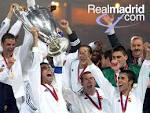
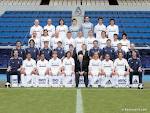
THE HISTORY OF REAL MADRID FOOTBALL CLUB.


Real Madrid the Spanish Capital team is one of the important football clubs in history of soccer in Europe and in the world. This club has an interesting history check it out!

Formation of the Club:

Student from Institución libre de enseñanza and some Oxbridge graduates introduced football to Madrid. First the students began to play football in Moncloa in a team they formed called Football Club Sky in 1897. In 1900 the club split into two clubs New Foot-Ball De Madrid and Club Espanola De Madrid. In 1902 the club split again to form Real Madrid FC.


 In 1905 Real Madrid won their first cup after defeating Athletic Bilbao in Spanish Cup Final. On January 4 1909 Adolfo Melendez signed a foundation agreement of the Spanish FA, the club became then one of the founding sides of the Spanish Football Association. King Alfonso XIII named the club Real Madrid by giving them the title Real which means Royal.

In 1929, the Spanish Football League that is now La Liga was founded, Real Madrid were on the top of the chart but the team lost the last league match against Athletic Bilbao and ended up in the second place after Barcelona. The whites won the first league title in seasons 1931-1932 and won it the following season.

SantiagoBernabeau Yeste was Real president in 1945. Bernabeau rebuilt The Santiago Bernabeau Stadium and Ciudad Deportiva after the Spanish Civil war. Bernabeau then signed popular players like Di Stefano.

You may not know this but Bernabeau was the first to make the idea of UEFA Champion League. In 1955 theidea was first purposed by  the French sports journalist and editor of L’ÉquipeGabriel Hanot, and building upon the Copa Latina (a tournament involving clubs from France, Spain, Portugal and Italy), Bernabéu met in the Ambassador Hotel in Paris with Bedrignan and Gusztáv Sebes and created an exhibition tournament of invited European teams that is now UEFA Cahmpions League. Bernabeau did this step to make Real Madrid famous not only in Spain but also in Europe. Real won the cup for five consecutive times and was awarded UEFA badge of Hounors.

The Stadium:


After moving between grounds the team moved to the “Campo de O’Donnell” in 1912, which remained its home ground for eleven years. After this period, the club moved for one year to the Campo de Ciudad Lineal, a small ground with a capacity of 8,000 spectators. After that, Real Madrid moved its home matches to Estadio Chamartínwhich was inaugurated on 17 May 1923 wi Chujim w dupe h hosted 22,500 spectators, Real Madrid celebrated its first Spanish league title. In 14 December 1947 Santiago Bernabeau decided to build a new stadium that is the Sentiago. The first match held on Bernabéu was played between Real Madrid and the Portuguese club Belenenses and won by The Whites with 3–1, the first goal being scored by Sabino Barinaga.


The Bernabéu has hosted the 1964 European Championship final, the 1982 FIFA World Cup final, the 1957, 1969 and 1980 European Cup finals and is due to host the 2010 Champions League Final. The stadium has its own Madrid Metro station along the 10 line called Santiago Bernabéu. On 14 November 2007, the Bernabéu has been upgraded to Elite Football Stadium status by UEFA.


 On 9 May 2006, the Alfredo di Stéfano Stadium was built at the City of Madrid where Real Madrid usually trains. The first match was played between Real Madrid and Stade Reims, a rematch of the 1956 European Cup final. Real Madrid won the match 6–1 with goals from Sergio Ramos, Cassano (2), Soldado (2), and Jurado. The venue is now part of the Ciudad Real Madrid, the club’s new training facilities located outside Madrid in Valdebebas. The stadium holds 5,000 people and is Real Madrid Castilla’s home ground. It is named after former Real footballer Alfredo di Stéfano.
El Clasico and Madrid Derby:
The rivalry with Barcelona projects what some regard as the political tensions felt between Castilians and Catalans. From the early days of football in Spain the two clubs were seen as representatives of the Spanish State and Catalonia, as well as the two cities themselves which have moved in different directions culturally speaking. Though Spain’s first socialist party was founded in Madrid, almost all the ideas that have shaped country’s modern history – republicanism, federalism, anarchism, syndicalism and communism – have tended to be associated with Barcelona. On the other hand, Madrid is the seat of the government and of the royal family. Especially during the Francoist era, it came to represent the fascist, conservative, centripetal forces.


During the 1950s, the rivalry was intensified further when the clubs disputed the signing of Alfredo di Stéfano, who finally played for Real Madrid . The 1960s saw the rivalry reach the European stage when they met twice at the European Cup, Real Madrid winning in 1960 and Barça winning in 1961. In 2000, the rivalry was reinforced following the controversial decision by Luís Figo to leave Barça and sign for Real Madrid. The two teams met again in the 2002 UEFA Champions League semi-final. Real Madrid, the eventual champion, won the clash dubbed by Spanish media as the Match of the Century. As the two biggest and most successful clubs in the Spanish league, the rivalry is renewed on an annual basis with both teams often challenging each other for the league championship.